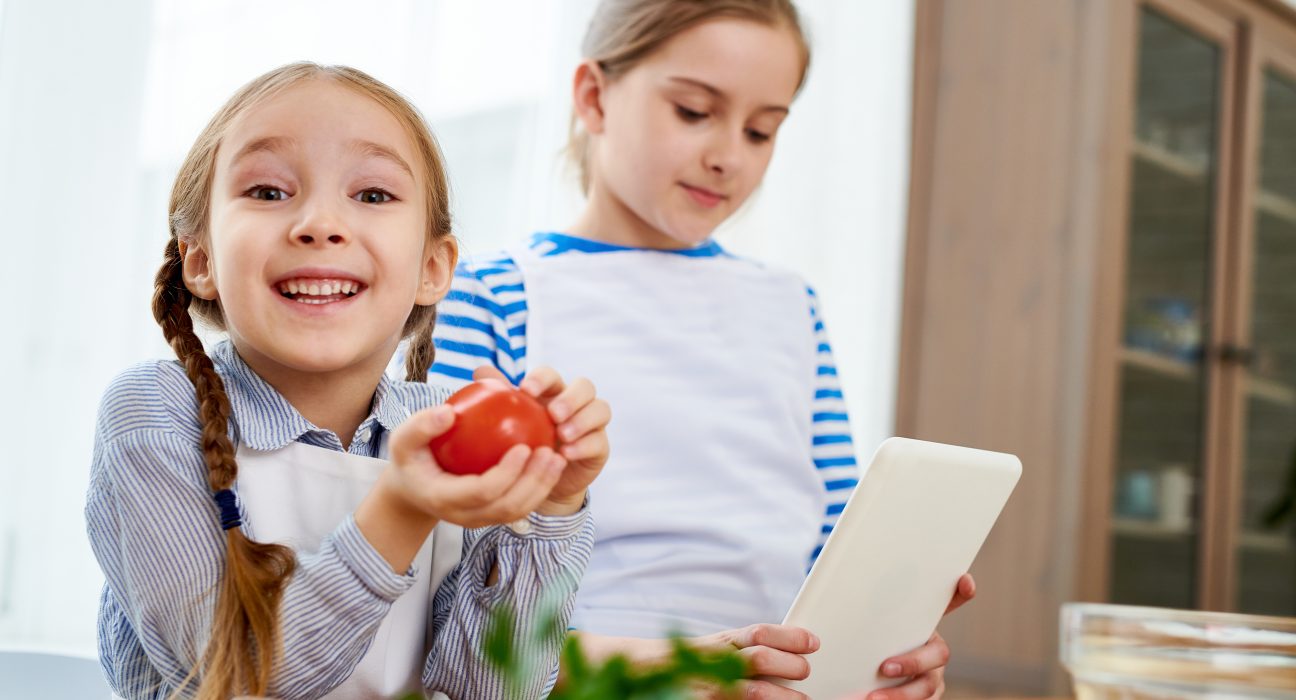
One of the most effective—and fun—ways to teach kids about healthy eating is by involving them in the kitchen. Cooking gives children hands-on experience with food and helps them understand what makes a balanced, nourishing meal. It’s not just about making dinner—it’s about building lifelong habits.
1. Make Cooking an Interactive Lesson
When kids help in the kitchen, they’re more likely to try new foods—especially if they’ve washed, chopped, or stirred it themselves. Use this time to talk about food groups: What makes a meal balanced? Why do we need veggies, proteins, and grains? Keep the language simple and age-appropriate, and let curiosity lead.
2. Explore Colors, Textures, and Flavors
Encourage your child to “eat the rainbow.” Talk about how different colored fruits and vegetables help different parts of the body (e.g., carrots for eyes, spinach for strength). Let them touch, smell, and taste ingredients while cooking to build familiarity and reduce picky eating.
3. Teach Smart Choices, Not Food Shame
Use cooking time to teach kids how to make better choices—without labeling foods as “good” or “bad.” Instead, talk about “everyday foods” (like fruits and whole grains) and “sometimes foods” (like sweets and chips). This helps create a balanced view of eating.
4. Make Healthy Swaps Together
Show them how you can turn favorite dishes into healthier versions: swap white rice for brown, use yogurt instead of mayo, or bake instead of fry. Let kids suggest ideas too—they love feeling involved.
5. Celebrate Small Wins
Whether they helped peel carrots or made their first smoothie, praise their efforts. The more positive the experience, the more likely they are to engage in healthy eating long-term.
Conclusion
Cooking is a powerful way to teach kids where food comes from and how to fuel their bodies well. By making it fun and educational, you’re planting the seeds for a lifetime of healthy habits.